
How Scouting Helped Charlotte – Autism Understanding Month
April 8, 2026“I really struggled to make friends at school (…), but at scouts we were all so busy having fun and going on adventures that the subtle intricacies of socialising did not really matter as much anymore.”
April is Autism Understanding Month, a month dedicated to building a more inclusive world through listening, learning, and action. A 2024 estimate by Aspect (Autism Spectrum Australia) suggested that at least 1 in 40 Australians are on the autism spectrum, an increase from the previous estimate of 1 in 70.
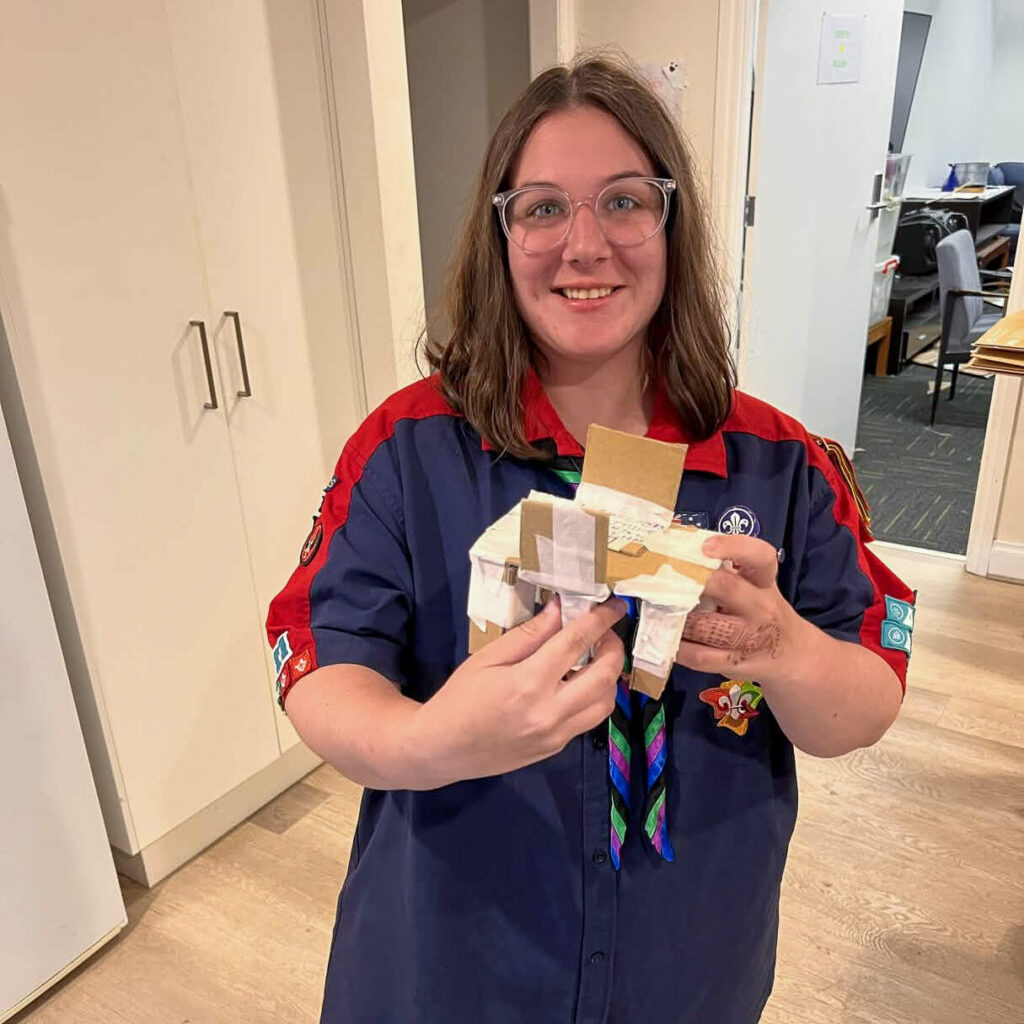
Charlotte is a member of the Attunga Rover Unit, who works in Aboriginal Health and is currently studying to be a Social Worker. Charlotte was diagnosed with autism at around 4 years of age. “When I was really little, I struggled to speak with other people, but after attending speech therapy and occupational therapy, I managed to catch up pretty quick, and now most people would describe me as a chatterbox”.
Charlotte truly embodies the Scout spirit, often greeting others with an iconic left-hand handshake. While making friends at school was difficult, Charlotte found connection and confidence at Scouts, bonding with others over shared interests and a love for the outdoors.
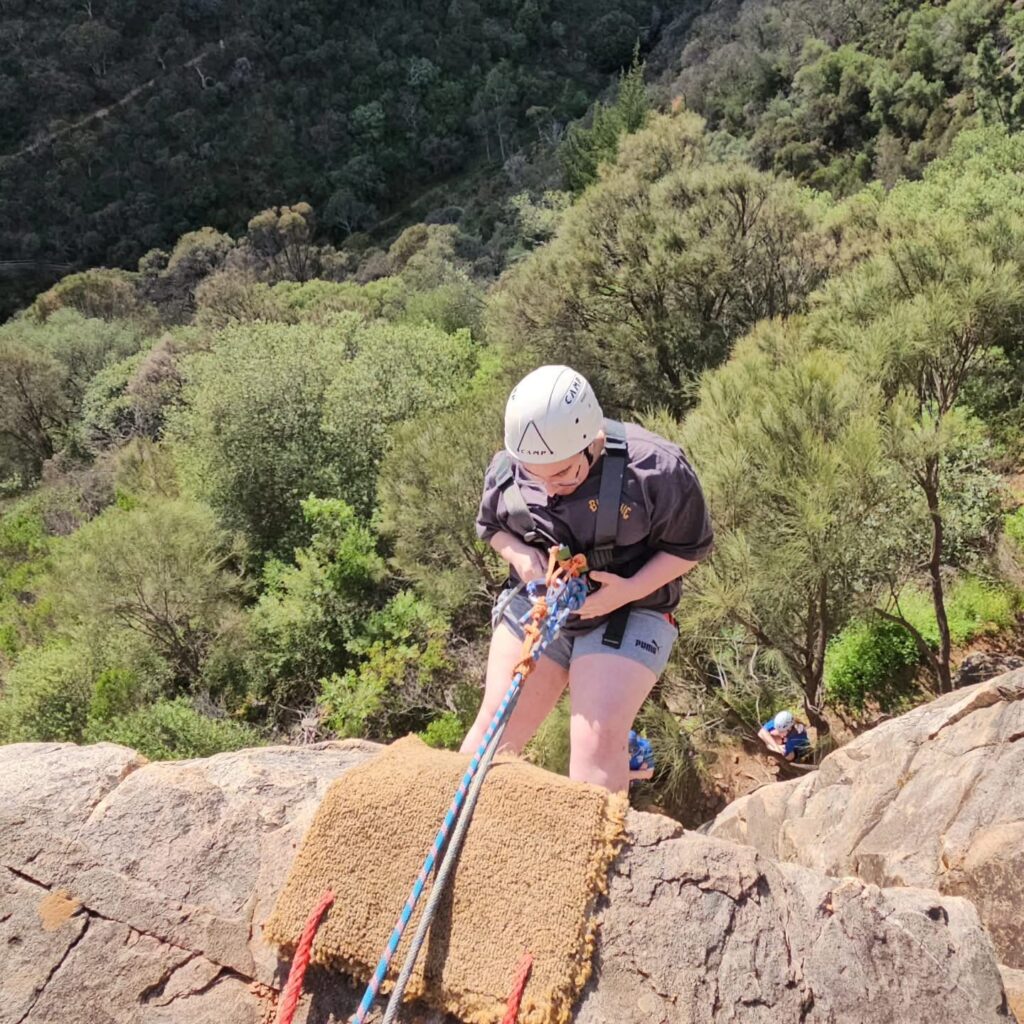
Scouting has given Charlotte the opportunity to go rock climbing (on real rocks!), learn how to work effectively within a team, and even travel to New Zealand for NZVenture as a Service Leader (how cool is that?!). “I loved learning to work in a team to help cater the expeditions,” Charlotte says. “I had never cooked for that many people before, and while it was hard, I gained so much knowledge from the experience.”
Unfortunately, damaging stereotypes persist around autism, with individuals sometimes unfairly portrayed as “scary or bad.” Charlotte notes, “A lot of media only portrays young children and males with high support needs, which is not representative of the diversity of autism.” Breaking these stereotypes is essential to fostering inclusion.
In a perfect world, Charlotte would love to see people get to know others before judging them. “Treat everyone with kindness and patience,” says Charlotte. “Sometimes people with autism can behave in ways that are a bit different, and that is okay! I think the best thing you can do to be a supportive friend is to ask the person with autism what makes them feel comfortable.”
If you’re supporting someone who struggles with verbal communication, Charlotte suggests reaching out to a parent or leader for advice. Many have personal experiences that can help, and some may even have specialist training in disability inclusion, all of which can make a real difference for everyone involved.
But how can we do more to support individuals with autism and build inclusion? While external providers can offer additional training, Charlotte says there is one key element: “Open communication is the key!”
“Communicate with youth and their families about what you can best do to support them,” Charlotte says. “I think also sometimes explaining to the youth members what autism is in an age-appropriate way, without making anyone feel ashamed or uncomfortable, is important.” Charlotte says one of the best pieces of advice she can give someone at any age is that “Some people just experience the world differently to you, and that’s okay” – wise words, Charlotte.
Charlotte has found her home in Scouting and highly recommends it to anyone who experiences neurodivergent tendencies. But don’t just take her word for it, go and see for yourself! “Visit a few groups to see where you feel most comfortable,” Charlotte says. “The best advice I could give to families who are looking into scouting for their children who are autistic and worried about joining scouts is to shop around.”
To learn more about Autism Understanding Month and discover ways you can get involved or support autism inclusion, visit Aspect.org.au for resources, ideas, and opportunities to make a meaningful difference.